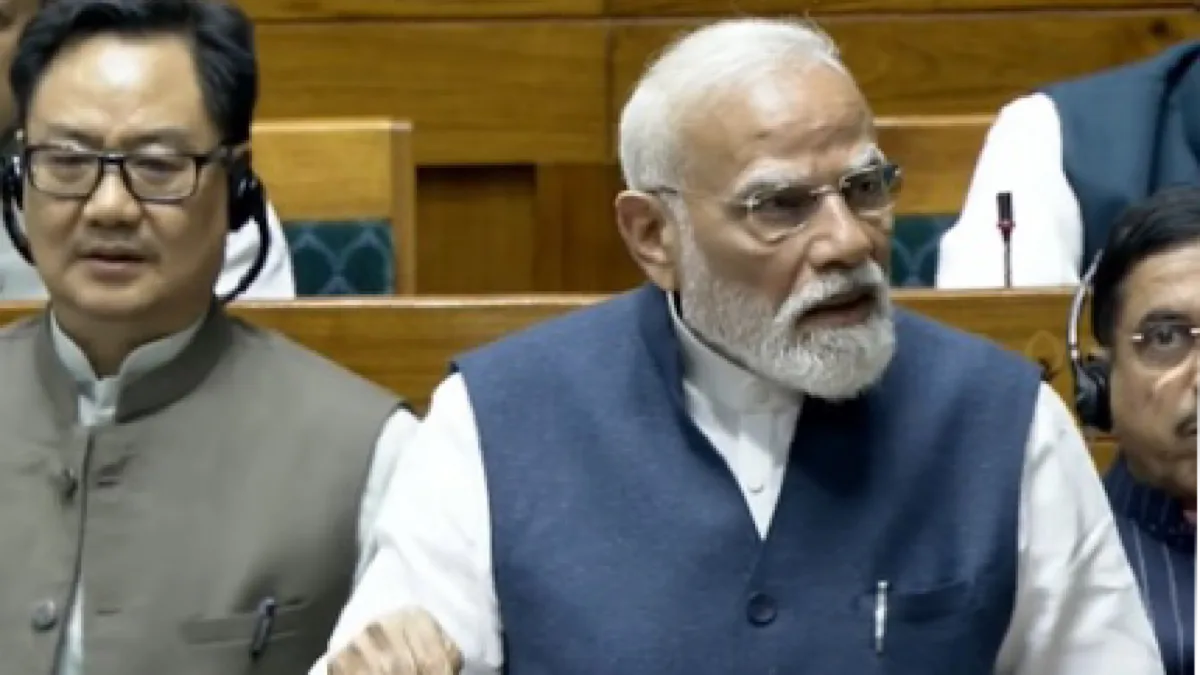
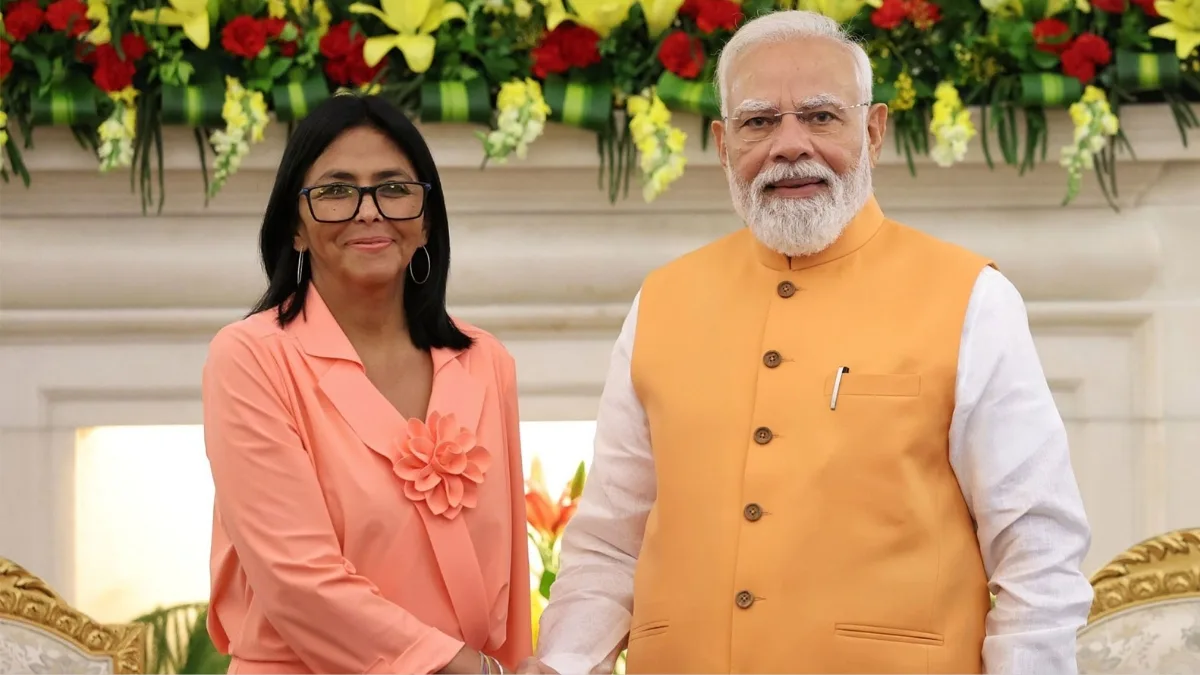
Prime Minister Narendra Modi on Thursday delivered a forceful pitch for the proposed 33 per cent reservation for women in legislatures, calling it a “historic and game-changing” reform and asserting that empowering women is fundamental to India’s journey toward becoming a developed nation.
Speaking in the Lok Sabha during a high-stakes special session, Modi framed the measure not as a political concession but as a long-overdue right. “We must not assume we are giving something to the Nari Shakti; this is their right,” he declared, urging lawmakers to view the moment as a structural correction in India’s democratic framework.
Advertisement
Positioning women’s representation at the heart of his “Viksit Bharat” vision, the Prime Minister argued that meaningful participation of women in decision-making is essential to strengthening democratic values. “Women’s participation in our parliamentary democracy is not just about numbers, but a commitment to democratic values,” he said, sharpening the moral and institutional stakes of the debate.
The government simultaneously moved a trio of key legislative proposals — the Constitution (One Hundred and Thirty-First Amendment) Bill, 2026, the Delimitation Bill, 2026, and the Union Territories Laws (Amendment) Bill, 2026 — marking what it described as a sweeping attempt to recalibrate India’s electoral architecture. At the centre of this legislative push lies the operationalisation of the women’s quota, tied closely to a nationwide delimitation exercise that would redraw constituency boundaries based on updated demographic realities.
Modi cast the Women’s Reservation Bill as a cornerstone of “Nari Shakti-led nation building,” arguing that India’s governance structures must evolve to reflect the growing leadership of women, already visible in panchayats and urban local bodies. He presented the reform as both an acknowledgment of this grassroots transformation and a catalyst for change at higher levels of governance.
In a direct appeal for bipartisan backing, Modi urged political parties to rise above partisan divides. “This should not be viewed through a political lens,” he said, calling the legislation a collective responsibility rather than a political battleground. His remarks come even as Opposition parties continue to express sharp reservations, particularly over the linkage between women’s reservation and delimitation, which they argue could reshape political representation across states with uneven population growth.
The Prime Minister acknowledged the centrality of delimitation in implementing the quota, defending it as necessary to ensure equitable representation. Critics, however, warn that the exercise could carry significant political consequences, intensifying the debate beyond gender justice into questions of federal balance and electoral fairness.
Thursday’s address marked a pivot in the special session’s agenda — from recent discussions on foreign policy and security to a deep dive into domestic institutional reforms. With the bills now set for detailed debate, the women’s reservation proposal is poised to dominate the political narrative, framed by the government as a milestone in democratic deepening, even as the Opposition scrutinises its design and long-term implications.